
Spectrum Press: Music by David Cope & EMI
Spectrum Press: Virtual XXth Century Composers: Virtual XXth Century Composers, a collection of works by David Cope & Experiments in Musical Intelligence, in the style of Bartok, Barber, Joplin, Gershwin, Messiaen, Schoenberg, Webern..., with sheet music available as PDF download, by Spectrum Press.


Guitar Concerto on the Radio
Guitar concerto featured on over 300 classical stations around the world!
This week's edition of Classical Guitar Alive! features a new concerto by Portuguese composer Patricio da Silva (“Keep Calm and Carry On”), and music by Rameau, Vivaldi, Hollywood film composer Jack Marshall (“Essay for Guitar”), Satie (performed by a dulcimer & guitar duo!), and more.
Program ID# 12-D65-00050
Title: 12-50 Keep Calm and Carry On
Title: 12-50 Keep Calm and Carry On
Brother Can You Spare a Dime - The Great Depression Music
Brother Can You Spare a Dime: Songs about the Great Depression
"Brother Can You Spare a Dime" lyrics by Yip Harburg music by Jay Gorney (1931)arrangement by Patricio da Silva in Youtube music video of Brother Can You Spare a Dime a 1930's song in the album "Now and Then" with Music and songs from the Great Depression (s): 2010/1929, with Patricio da Silva, composer and artistic direction, Ian Whitcomb, vocal, accompanied by the What's Next Ensemble, conducted by maestro Vimbayi Kaziboni.
Music from the Great Depression
Brother Can You Spare A Dime (the title of the song is also known as Buddy Can You Spare a Dime) became one of the most important popular songs of the Great Depression Music in America with a success that promises to last over many more generations. It is one of best period documentaries of American life in the 1930s. Speaking from the worker's perspective, the lyrics of Brother Can You Spare A Dime had the ingredients to resonate and have an immediate affinity with the people's lives then and thereafter.Brother Can You Spare a Dime Meaning
From Brother Can You Spare A Dime with lyrics by Yip Harburg and music by Jay Gorney emerges a song that resonates life as lived in America during the Great Depression era, the thoughts and feelings of those generations who helped develop the country, built railroads and skyscrapers but were crushed and left out by the stock market crash of 1929 of that same world one day they helped build.The Great Depression Music: Other Songs of the Great Depression
Discover other songs about the Great Depression and 1930s music in the Album "Now and Then" Music From The Great Depression (s):
http://www.thesoundstew.com/2011/06/im-happy-when-im-hiking.html
 |
| Brother Can You Spare A Dime - Sheet Music. Listen to Brother Can You Spare a Dime in the album Now & Then: Music From the Great Depression (s) 2010 / 1929 |
Brother Can You Spare a Dime Lyrics
Lyrics by Yip Harburg, music by Jay Gorney (1931)They used to tell me I was building a dream, and so I followed the mob,
When there was earth to plow, or guns to bear, I was always there right on the job.
They used to tell me I was building a dream, with peace and glory ahead,
Why should I be standing in line, just waiting for bread?
Once I built a railroad, I made it run, made it race against time.
Once I built a railroad; now it's done. Brother, can you spare a dime?
Once I built a tower, up to the sun, brick, and rivet, and lime;
Once I built a tower, now it's done. Brother, can you spare a dime?
Once in khaki suits, gee we looked swell,
Full of that Yankee Doodly Dum,
Half a million boots went slogging through Hell,
And I was the kid with the drum!
Say, don't you remember, they called me Al; it was Al all the time.
Why don't you remember, I'm your pal? Buddy, can you spare a dime?
Once in khaki suits, gee we looked swell,
Full of that Yankee Doodly Dum,
Half a million boots went slogging through Hell,
And I was the kid with the drum!
Say, don't you remember, they called me Al; it was Al all the time.
Say, don't you remember, I'm your pal? Buddy, can you spare a dime?
Clarinet Quintet - Sheet Music - Score and Parts
Clarinet Quintet by Patricio da Silva
Digital Printable Sheet Music
Clarinet Quintet by Patricio da Silva, premiered at the London American Music Festival to great critical acclaim is now available as Clarinet Quintet Youtube. Clarinet Quintet by Patricio da Silva also available as printable sheet music available download at Scribd.
 |
| Clarinet Quintet |
The Rhythm Book: An Algorithmic Approach, by Patricio da Silva
The Rhythm Book: An Algorithmic Approach, by Patricio da Silva.
A textbook of practical exercises designed to provide a comprehensive rhythmic training for the modern musician.
Used in different colleges and high-schools internationally, The Rhythm Book: An Algorithmic Approach provides exercises, definitions, and rhythm theory for all levels of musical training.
Order your copy today!
A textbook of practical exercises designed to provide a comprehensive rhythmic training for the modern musician.
Used in different colleges and high-schools internationally, The Rhythm Book: An Algorithmic Approach provides exercises, definitions, and rhythm theory for all levels of musical training.
Order your copy today!
Patricio da Silva: Guitar Concerto - Music Video
Patrício da Silva's Guitar Concerto "Keep Calm & Carry On", released as music video featuring Michael Kudirka, solo guitar, and the What's Next? Ensemble, directed by Vimbayi Kaziboni.
Available as mp3 download on Itunes and Amazon.

Available as mp3 download on Itunes and Amazon.

Patrício da Silva's Guitar Concerto
from the album Now & Then: Music From the Great Depression(s) 2010/1929
from the album Now & Then: Music From the Great Depression(s) 2010/1929
Michael Kudirka, solo guitar
Vimbayi Kaziboni, conductor
Vimbayi Kaziboni, conductor
What’s Next? Ensemble
Hiking Music: Great Hiking Songs I'm Happy When I'm Hiking
I'm Happy When I'm Hiking, one of the best hiking songs for kids and good hiking music for grown ups alike, and among most famous scout songs, now available as audio in mp3 on Amazon and Itunes and on CD.
I'm Happy When I'm Hiking
Music and Lyrics by Ralph Buttler and Raymond Wallace.
Ian Whitcomb writes "(...) Fifteen years earlier, when America joined the war in Europe, the Alleymen had buckled down to patriotic duty providing go-get-’em marching songs like “We Don’t Want The Bacon — What We Want Is A Piece Of The Rhine”, treating a distant conflict like an out-of-town vaudeville show. But now, in the eerie quietness of these early hard times for urbanites, the message was milder. The suggestion was “Let’s Have Another Cup Of Coffee” or “Let’s Put Out The Lights and Go To Sleep,” rather than a goose-step to an apocalyptic rendezvous with destiny, as they would be doing in Germany. "(...)
"(...) Actually, in nearby England the native songwriters were recommending a brisk walk — “I’m Happy When I’m Hiking” — in long shorts (or short longs) as an antidote to an unfortunate turn of events in the stock market, not to be confused with the ongoing rotten state of things ever since the Great War had shaken the Empire and let upstart Americans strut about, flooding the isles with their jizzy-jazz and slang. In London’s own Tin Pan Alley my songwriting uncle and his colleagues were censuring the limited range of Yank song subjects as “indoor poodle-faking” involving the “lugubrious lamentations of a disappointed lover.”
© Ian Whitcomb
I'm Happy When I'm Hiking - Music Video
Music and Lyrics by Ralph Buttler and Raymond Wallace
Arrangement by Patricio da Silva
Patrício da Silva, composer/arranger
Ian Whitcomb, vocal, ukulele, musette accordion
Vimbayi Kaziboni, conductor
What’s Next? Ensemble:
Sakura Tsai, violin
Edgar Sandoval, violin
John Stulz, viola
Stella Cho, cello
Harish Kumar, bass
Tara Schwab, flute
Carmen Izzo, clarinet
Caster Teoh, trumpet
Michael Kudirka, guitar
Katherine Norring, piano
Brian Foreman, drums/percussion
I'm Happy When I'm Hiking
Music and Lyrics by Ralph Buttler and Raymond Wallace.
Arrangement by Patricio da Silva.
Ian Whitcomb writes "(...) Fifteen years earlier, when America joined the war in Europe, the Alleymen had buckled down to patriotic duty providing go-get-’em marching songs like “We Don’t Want The Bacon — What We Want Is A Piece Of The Rhine”, treating a distant conflict like an out-of-town vaudeville show. But now, in the eerie quietness of these early hard times for urbanites, the message was milder. The suggestion was “Let’s Have Another Cup Of Coffee” or “Let’s Put Out The Lights and Go To Sleep,” rather than a goose-step to an apocalyptic rendezvous with destiny, as they would be doing in Germany. "(...)
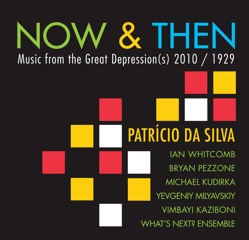 |
| I'm Happy When I'm Hiking from the album Now & Then: Music From the Great Depression(s) 2010 / 1929, featuring Ian Whitcomb and the What's Next? Ensemble in arrangements by Patricio da Silva |
© Ian Whitcomb
I'm Happy When I'm Hiking - Music Video
Music and Lyrics by Ralph Buttler and Raymond Wallace
Arrangement by Patricio da Silva
Patrício da Silva, composer/arranger
Ian Whitcomb, vocal, ukulele, musette accordion
Vimbayi Kaziboni, conductor
What’s Next? Ensemble:
Sakura Tsai, violin
Edgar Sandoval, violin
John Stulz, viola
Stella Cho, cello
Harish Kumar, bass
Tara Schwab, flute
Carmen Izzo, clarinet
Caster Teoh, trumpet
Michael Kudirka, guitar
Katherine Norring, piano
Brian Foreman, drums/percussion
THE SOCIETY OF COMPOSERS & LYRICISTS (SCL): Future Music Emerging Roles, Technologies, and Concepts in Interactive Media Scoring
THE SOCIETY OF COMPOSERS & LYRICISTS (SCL)
Presents
Future Music
Emerging Roles, Technologies, and Concepts in
Interactive Media Scoring
THURSDAY, August 4th, 2011
7:00-9:00pm
Talent agent Adam Levenson moderates a panel of renowned composers and music technology innovators at the cutting-edge of emerging trends in music for interactive media and beyond. The panel will demonstrate and discuss key aspects of the creative, technological, and business implications of developing concepts such as real-time composition, algorithmic composition, artificial intelligence driven scoring, on-demand cloud-based integration, and more.
Join us for an evening of lively discussion and demonstrations as we glimpse into our crystal ball toward the future of the art of scoring. A Q&A will follow the main presentation.
Panel members include:
Robert Hamilton – Stanford CCRMA
Electro-acoustic music composer and interactive music systems specialist
Laura Karpman
Four-time Emmy winning film, TV, and game composer
Daniel Lehrich – VenLabs
Interactive audio specialist, game designer, Max/MSP expert
Steve Nalepa
Music producer, composer, professor, DJ, and Ableton Live expert
Garry Schyman
Multi award-winning BioShock series composer and SCL board member
Patricio da Silva
Award-winning composer and algorithmic music designer
For more info, please visit:
http://www.thescl.com/calendar
Presents
Future Music
Emerging Roles, Technologies, and Concepts in
Interactive Media Scoring
THURSDAY, August 4th, 2011
7:00-9:00pm
Talent agent Adam Levenson moderates a panel of renowned composers and music technology innovators at the cutting-edge of emerging trends in music for interactive media and beyond. The panel will demonstrate and discuss key aspects of the creative, technological, and business implications of developing concepts such as real-time composition, algorithmic composition, artificial intelligence driven scoring, on-demand cloud-based integration, and more.
Join us for an evening of lively discussion and demonstrations as we glimpse into our crystal ball toward the future of the art of scoring. A Q&A will follow the main presentation.
Panel members include:
Robert Hamilton – Stanford CCRMA
Electro-acoustic music composer and interactive music systems specialist
Laura Karpman
Four-time Emmy winning film, TV, and game composer
Daniel Lehrich – VenLabs
Interactive audio specialist, game designer, Max/MSP expert
Steve Nalepa
Music producer, composer, professor, DJ, and Ableton Live expert
Garry Schyman
Multi award-winning BioShock series composer and SCL board member
Patricio da Silva
Award-winning composer and algorithmic music designer
For more info, please visit:
http://www.thescl.com/calendar
Music, Songs and Stories from The Great Depression: "Brother, can you spare a dime? Buddy can you spare a dime? Buddy, can u spare a dime? Popular songs from America's 1929 Depression-era.
Music, Songs and Stories from America's 1929 Great Depression: "Brother, can you spare a dime?
Compare Brother can you spare a dime? through the audio and youtube videos of different versions arrangements and orchestrations of one of the most popular Great Depression-era songs as performed by different generations of crooners, including Al Jolson, Bing Crosby, and Ian Whitcomb.
Brother Can You Spare a Dime mp3 available now on Amazon and Itunes
Brother Can You Spare a Dime with Al Jolson - video clip
Brother Can You Spare a Dime with Bing Crosby - video clip
| |||
| Brother Can You Spare a Dime? Now available as mp3 download on Amazon and Itunes. Now & Then: Music from the Great Depression (s) 2010 / 1929 by Patrício da Silva |
Brother Can You Spare a Dime Lyrics by Yip Harburg
They used to tell me I was building a dream, and so I followed the mob,
When there was earth to plow, or guns to bear, I was always there right on the job.
They used to tell me I was building a dream, with peace and glory ahead,
Why should I be standing in line, just waiting for bread?
Once I built a railroad, I made it run, made it race against time.
Once I built a railroad; now it's done. Brother, can you spare a dime?
Once I built a tower, up to the sun, brick, and rivet, and lime;
Once I built a tower, now it's done. Brother, can you spare a dime?
Once in khaki suits, gee we looked swell,
Full of that Yankee Doodly Dum,
Half a million boots went slogging through Hell,
And I was the kid with the drum!
Say, don't you remember, they called me Al; it was Al all the time.
Why don't you remember, I'm your pal? Buddy, can you spare a dime?
Once in khaki suits, gee we looked swell,
Full of that Yankee Doodly Dum,
Half a million boots went slogging through Hell,
And I was the kid with the drum!
Say, don't you remember, they called me Al; it was Al all the time.
Say, don't you remember, I'm your pal? Buddy, can you spare a dime?
| |||
| Brother Can You Spare a Dime? MP3 download on Amazon and Itunes. Now & Then: Music from the Great Depression (s) 2010 / 1929 by Patrício da Silva |
Brother Can You Spare a Dime mp3 on Amazon and Itunes .
Brother, Can You Spare a Dime? Brother, can u spare a dime? Buddy, can you spare a dime? Buddy, can u spare a dime? Lyrics, Songs and Stories from The Great Depression
Brother Can You Spare a Dime?
Brother Can You Spare a Dime: Who Wrote the Music and Lyrics?
Brother Can You Spare a Dime lyrics by E. Y. "Yip" Harburg and music by Jay Gorney (1931), here in an modern arrangement by Patricio da Silva as heard on Amazon Brother Can You Spare a Dime audio recording available as mp3 download, remains one of the best American songs of the 1930s and a living documentary about American life through the eyes of the people of the Great Depression. The iconic 1930s song, from the generation that couldn't afford a train ride on the rail road they once helped build.
"Brother Can You Spare a Dime" also sung as "Buddy, Can You Spare a Dime?" remains one of the most iconic and best known American songs during the Great Depression history, a song with lyrics meaning and reflecting life in the Great Depression period. Written in 1931 by lyricist E. Y. "Yip" Harburg and composer Jay Gorney, "Brother Can You Spare a Dime" was first performed in the 1932 musical New Americana and later popularized by the recordings of Bing Crosby and Rudy Vallee.
 |
| Brother Can You Spare A Dime - Original Artwork Now & Then: Music From the Great Depression (s) 2010 / 1929 |
"Brother Can You Spare A Dime" became best known through the recordings by Bing Crosby and Rudy Vallee. Both Crosby and Vallee's versions were released right before Franklin Delano Roosevelt's election to the presidency and both versions became number one hits on the charts. The Brunswick Crosby recording became the best-selling record of its period, and came to be viewed as a "depression anthem", reflecting on the shattered dreams of the era, symbolized by the rail road they once helped build that became unaffordable to them.
|
| Brother, Can You Spare a Dime? on Amazon asks why the men who built the nation – built the railroads, built the skyscrapers – who fought in the war (World War I), who tilled the earth, who did what their nation asked of them should, now that the work is done and their labor no longer necessary, find themselves abandoned, in bread lines. From the album Now and Then: Music from the Great Depression (s) 2010 / 1929 by Patricio da Silva. |
Brother Can You Spare a Dime Meaning
Brother, Can You Spare a Dime? - is a song about how people lived during and after the great depression in 1929 and asks why the men who built the nation – built the railroads, built the skyscrapers, who fought in the war (World War I), who tilled the earth, who did what their nation asked of them should- now that the work is done and their labor no longer necessary- find themselves abandoned amidst financial collapse, seeking a bite to eat in bread lines.
Unemployment in the U.S just before the stock market crash in 1929 was around 3.2%. Then in 1930, immediately after the stock market crash devastated the U.S. economy, the average unemployment was 8.9%. By 1932 during the Great Depression, when Bing Crosby's version of Brother Can You Spare A Dime was released, the unemployment had soared to 24.1%.
Brother Can You Spare A Dime was composed for “New Americana”, a 1931 Broadway musical. The singer embodies the average American Joe and his shattered dreams. According to lyricist E.Y. "Yip" Harburg (who also wrote the lyrics for "Somewhere Over the Rainbow"), the lyrics of Brother Can You Spare A Dime were meant to capture the confused feeling of the times:
"He's bewildered. Here is a man who had built his faith and hope in this country. then came the crash. Now he can't accept the fact that the bubble has burst. He still believes. He still has faith. He just doesn't understand what could have happened to make everything go so wrong."
Lots of people identified themselves with the character in Brother, Can You Spare A Dime.
The economy of 1932 was in the dust and dragging millions to joblessness, homelessness, starvation, and a loss of morale nationwide.
Political movements typically seen as extremists in the US such as communism and socialism as well as fascism were actually viewed sympathetically by a lot of Americans who felt that had been betrayed by the system, the Government, Wall St. and the bankers.
On October 29, 1929, the American stock market crashed. As stock prices plummeted, investors panicked and sold off their investments, driving prices even lower. Financial failures snowballed in the years that followed with many breadwinners unemployed and families that could not pay their bills. Broke, homeless, and hungry people lined the streets wherever there was a bread line to get something to eat. In western states, the “Dust Bowl”—drought, erosion, and dust storms—drove farmers from their lands.
As calamity ruled the United States, most Americans could not understand how such an economic disaster could strike everybody, including their smart, rich, mighty country.
By 1932, the U.S. found itself in tough shape with family businesses struggling to keep afloat, big companies were collapsing, banks were closing, and people were losing their jobs in record numbers. Nearly one out of four workers was unemployed. How did this happen? Throughout the 1920s—the fast-paced, get-rich-quick “Roaring Twenties”—the sky seemed the limit to most Americans. Now, that hopeful attitude was gone. People found it tough to put words to the disillusionment and fear they felt.
And this is the story behind “Brother, Can You Spare a Dime?” This beautiful and heartbreaking song became the symbol of one of the toughest periods in U.S. history.
Unemployment in the U.S just before the stock market crash in 1929 was around 3.2%. Then in 1930, immediately after the stock market crash devastated the U.S. economy, the average unemployment was 8.9%. By 1932 during the Great Depression, when Bing Crosby's version of Brother Can You Spare A Dime was released, the unemployment had soared to 24.1%.
Brother Can You Spare A Dime was composed for “New Americana”, a 1931 Broadway musical. The singer embodies the average American Joe and his shattered dreams. According to lyricist E.Y. "Yip" Harburg (who also wrote the lyrics for "Somewhere Over the Rainbow"), the lyrics of Brother Can You Spare A Dime were meant to capture the confused feeling of the times:
"He's bewildered. Here is a man who had built his faith and hope in this country. then came the crash. Now he can't accept the fact that the bubble has burst. He still believes. He still has faith. He just doesn't understand what could have happened to make everything go so wrong."
Lots of people identified themselves with the character in Brother, Can You Spare A Dime.
The economy of 1932 was in the dust and dragging millions to joblessness, homelessness, starvation, and a loss of morale nationwide.
Political movements typically seen as extremists in the US such as communism and socialism as well as fascism were actually viewed sympathetically by a lot of Americans who felt that had been betrayed by the system, the Government, Wall St. and the bankers.
Brother Can You Spare a Dime Analysis
On October 29, 1929, the American stock market crashed. As stock prices plummeted, investors panicked and sold off their investments, driving prices even lower. Financial failures snowballed in the years that followed with many breadwinners unemployed and families that could not pay their bills. Broke, homeless, and hungry people lined the streets wherever there was a bread line to get something to eat. In western states, the “Dust Bowl”—drought, erosion, and dust storms—drove farmers from their lands.
As calamity ruled the United States, most Americans could not understand how such an economic disaster could strike everybody, including their smart, rich, mighty country.
By 1932, the U.S. found itself in tough shape with family businesses struggling to keep afloat, big companies were collapsing, banks were closing, and people were losing their jobs in record numbers. Nearly one out of four workers was unemployed. How did this happen? Throughout the 1920s—the fast-paced, get-rich-quick “Roaring Twenties”—the sky seemed the limit to most Americans. Now, that hopeful attitude was gone. People found it tough to put words to the disillusionment and fear they felt.
And this is the story behind “Brother, Can You Spare a Dime?” This beautiful and heartbreaking song became the symbol of one of the toughest periods in U.S. history.
|
| Brother Can You Spare A Dime - Sheet Music. Listen to Brother Can You Spare a Dime in the album Now & Then: Music From the Great Depression (s) 2010 / 1929 |
Brother, Can You Spare a Dime Lyrics
Song by Yip Harburg (lyrics) and Jay Gorney (music).
They used to tell me I was building a dream, and so I followed the mob,
When there was earth to plow, or guns to bear, I was always there right on the job.
They used to tell me I was building a dream, with peace and glory ahead,
Why should I be standing in line, just waiting for bread?
Once I built a railroad, I made it run, made it race against time.
Once I built a railroad; now it's done. Brother, can you spare a dime?
Once I built a tower, up to the sun, brick, and rivet, and lime;
Once I built a tower, now it's done. Brother, can you spare a dime?
Once in khaki suits, gee we looked swell,
Full of that Yankee Doodly Dum,
Half a million boots went slogging through Hell,
And I was the kid with the drum!
Say, don't you remember, they called me Al; it was Al all the time.
Why don't you remember, I'm your pal? Buddy, can you spare a dime?
Once in khaki suits, gee we looked swell,
Full of that Yankee Doodly Dum,
Half a million boots went slogging through Hell,
And I was the kid with the drum!
Say, don't you remember, they called me Al; it was Al all the time.
Say, don't you remember, I'm your pal? Buddy, can you spare a dime?
Brother Can You Spare a Dime mp3
Download Brother Can You Spare a Dime mp3 it on Itunes and Amazon: Brother Can You Spare a Dime download.
Famous Great Depression Songs
From the same of album with music and musical arrangements by Patricio da Silva, Foxtrot Music from 1929, Fairy on the Clock:More about Great Depression Music:
www.thesoundstew.com/2011/08/now-then-music-from-great-depression-s.html
Subscribe to:
Posts (Atom)