Foxtrot Music
Fairy On The Clock (1929)
in the album
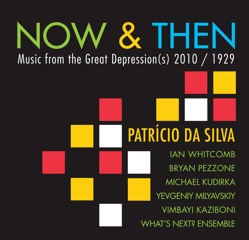
Now & Then: Music From the Great Depression (s) 2010 / 1929
by Patricio da Silva
Originally developed in the 1920s and danced to ragtime, the foxtrot is a progressive dance in quaternary meter characterized by long, continuous flowing steps across the dance floor, often associated with the sound of big bands.
The foxtrot reached its height of popularity in the 1930s, and remains practiced today. The etymology of foxtrot is commonly attributed to entertainer and vaudeville actor Harry Fox who popularized the dance.
Foxtrot Music
Fairy On The Clock (1929)
in the album
Now & Then: Music From the Great Depression (s) 2010 / 1929
by Patricio da Silva
One of the top songs of the 1930s music the list of the most popular 1930's songs and 1930's music certainly includes Whistle And Blow Your Blues Away one of the best 1930's songs and examples of popular music from the Great Depression era. Whistle And Blow Your Blues Away with original lyrics by Joe Young and music by Carmen Lombardo, the younger brother of bandleader Guy Lombardo, in a modern arrangement by Patricio da Silva (2010).
1930s Music: Whistle And Blow Your Blues Away (1932)
from the album
Now & Then: Music From the Great Depression (s) 2010 / 1929
by Patricio da Silva
"Whistle And Blow Your Blues Away" (1932) - Lyrics
Here's how to make things okay
Just whistle and blow your blues away
You'll swing along through the day
Just and whistle and blow your blues away
You're bound to lose your troubles and every care
They're only little bubbles, so give them air
Come on and white-wash the gray
Just whistle and blow your blues away
Here's how to make things okay
Just whistle and blow your blues away
You'll swing along through the day
And whistle and blow your blues away
You're bound to lose your troubles and every care
They're only little bubbles, so give them air
Come on and white-wash the gray
Just whistle and blow your blues away
Carmen Lombardo -Biography
Carmen Lombardo (July 16, 1903 - April 17, 1971) was the younger brother of bandleader Guy Lombardo a legend from 30s music and 30s songs. He was a vocalist and composer whose compositions included the 1928 classic "Sweethearts on Parade", which was number one for three weeks in 1929 on the U.S. pop charts, "Whistle And Blow Your Blues Away" and "Ridin' Around in the Rain", written with Gene Austin in 1934, the jazz and pop standards "Coquette", "Boo Hoo", and "Some Rainy Day", and "Powder Your Face With Sunshine (Smile, Smile, Smile)", written with Stanley Rochinski in 1948-49.
He frequently collaborated with American composers and his music was recorded by Louis Armstrong, Bing Crosby, and others. Many of his compositions have also been used in Woody Allen films.
The gentle art of crooning, a pop murmur that was gratefully heard around the world until scuppered by the shouts and screams of rock’n’roll, was made possible by the establishment of commercial radio in the early 1920s. Radio’s microphones, amplifiers and loudspeakers allowed into the home and heart a steady stream of unguent from a dapper and friendly party of confidential song salesmen who offered nothing less than comfort and shelter from the storms of life. In their language of love the crooners were eventually to perfect electronic musical romance in two minutes or so of sweet nothings, skillfully crafted as if they were singing to you and you alone.
Now & Then: Music From the Great Depression(s) 2010 / 1929
Boasted the radio engineers, “The sophistication of our microphones is such that we can even capture the swish of a powder puff as it passes over the nose of some fair lady.” This was an age of unstoppable advance in modern technology. Horse and buggy were old hat; stentorian preachers and booming Chautauqua lecturers, not to mention red-faced politicians pounding and hectoring from distant platforms, would soon be Victorian hangovers. The soft and casual radio “Fireside Chats” of FDR were just around the corner.
The coming of the seemingly effete crooner was not only part of a technological revolution but also of a social one.
In the beginning, back in real Olden Times, crooning was confined to a mother soothing her baby with lullabies, rocking in steady rhythm so that the child was soon safe in dreamland. Thus was crooning a woman’s job. By the end of the nineteenth century red-blooded American males prided themselves on being macho meat eaters with a steady eye and a hearty handshake. Men were men, women were women, and a good cigar was a smoke. Popular singing styles reflected this beefy masculinity: the balladeers of stage and saloon sang from deep in their chests, giving forth at a volume capable of breaking a glass at fifty paces or so.
Now & Then: Music From the Great Depression(s) 2010 / 1929
There was also a practical reason for such strength — in those pre-microphone days it was necessary for artists to bellow in order to be heard at the back of a theatre. Nobody slept when Al Jolson belted out his joy at being alive. In the recording studio, again without benefit of electrical amplification, leather-lunged singers were required, accompanied by vibrant instrumentation. Banjos and bells were favored, sitting well with ragtime shouters and chirrupy comedians.
The radio craze of the 1920s cut into record sales mightily. Why should folks buy a hissy, squawking disc when they could hear smooth sounds for free? And radio also provided a free mouthpiece for song pluggers, the most successful being those with an intimate tone that flew straight into a housewife’s heart. Women called the tune when pop culture left the public place for the private home.
In the beginning, spreading across the ether of the Midwest, was an odd assortment of rugged individualists with a soft vocal approach: Art Gillham, “The Whispering Pianist,” “Little” Jack Little, “The Friendly Voice of the Cornfields”; covering New York was another suave whisperer, Jack Smith, “The Whispering Baritone,” darling of the New York cocktail set.
Now & Then: Music From the Great Depression(s) 2010 / 1929
When the recording industry saw the light and went electric too in 1925 these intimate voices could be spread all over America and even the world. The culture was ready for them, a perfect synchronicity. For, in the middle of the brash and noisy jazz age, a league of gentlemen was challenging the vo-dodeo-do by clever use of the mike — confidential conversationalists, easy-going fellows with a certain bedside manner in their restrained voices.
They were early crooners — before the term became derogatory and then standard — without the sappiness that was to follow. With nonchalance they effected a pop revolution by bringing out that hitherto repressed femininity hidden under the hide of the All-American brute-master. They were revolutionaries suggesting an alternate male world of soft collars, soft shirts, and soft hats, accompanied by a soft courtliness in the modern manner. They were the new troubadours, offering medieval romanticism in an age of flappers, vamps and machine gun gangsters. They were the civilized side of the jazz age. And they tempered their good manners with good humor.
Let us look in more detail at some of these early masters of the mike.
Now & Then: Music From the Great Depression(s) 2010 / 1929
Of all the pioneers Gene Austin, a Texan, had, I believe, the most beautiful voice and most relaxing style. He had started as a hot singer in the acoustic days but electricity had freed him to croon. Radio never claimed him, perhaps because he loved the road too much. Despite his million-selling anthem to domestic bliss, “My Blue Heaven” (1927), he was a rolling stone with a filled flask of hooch, gathering and shedding quite a few wives along the way. But he had a generous nature and nurtured the songwriting career of Fats Waller, being the first to record Fats’ “Ain’t Misbehavin’ ,” insisting that the composer play piano on the disc. His effortless balladeering was a big influence on the young Gene Autry and on many later country stars such as Eddie Arnold. Even Elvis cites Austin as one of his heroes. In the late 1920s he sold more records than any other performer.
Now & Then: Music From the Great Depression(s) 2010 / 1929
“Little” Jack Little hewed closer to the mike than Austin; it was almost as if his very life depended on it. Born John Leonard in London, he was raised in Iowa. After song plugging and radio work he was called to the recording studio where he showed off his radiophonic skills: a slow exhalation of breath would preface his interpretation of a new streamlined ballad, very often his own work. Radio dictated a need for ultra simple melodies with short verses, stuff that could catch on to be repeated over and over as when a child gets hooked on a story. Executives had informed Tin Pan Alley that a range of no more than five melody notes around the middle of the keyboard were most suitable for quality radiophonics.
Guided by this Jack Little wrote catchy tunes which he recorded out of the side of his mouth, daring you to come closer, backing it with his own simple piano—punctuated by fiery bursts of chinesey phrases and ear-thrilling cross-hand thumb melodies. A pixie offering gifts of featherweight slivers of song. In the 1930s he scored with “Hold Me,” performing it so quietly you’d have to hold him to hear it. Then he hit with “A Shanty In Old Shanty Town” but curiously he was never asked to record it. Soon he was swallowed up in the mass of other mooing cookie-cut crooners of the period.
The same thing was to happen to Jack Smith, “The Whispering Baritone,” another eccentric from this bohemian and freewheeling era of popular singing. Always pictured in immaculate evening dress, he sang-spoke with clear clipped enunciation, often rolling his “r”s, a true diseur. Though he could tell us the sad story of “Me And My Shadow” he could also sing tongue in cheek, something he had in common with Art Gillham, his deadly rival. In “Baby Face” he rolls merrily along until the tail end when he suddenly spoils the hymn of praise to the little girlie by stating:” But at the break of dawn with all her make-up gone — Oh, Lord! What a face!”
Art Gillham, another pianist-singer like Little, Smith and Austin, is perhaps the most interesting of all these trailblazers for he spans the period between the end of ragtime and the start of electronic media. Cannily he understood the power of radio.
Now & Then: Music From the Great Depression(s) 2010 / 1929
A wandering troubadour who’d learned his rugged style in the fleshpots of St Louis, hotbed of ragtime, he was, by 1922, a plugger for a Chicago publisher. This enabled him to perambulate around the hinterland, dropping in on new-fangled radio stations (most started by department stores, newspapers, and even a dry-cleaners—outfits that were truly greenhorn) in order to demonstrate his latest wares. The radio people were delighted to let him fill their virtually empty air with cracker-barrel musings as he snuggled up close to the mike since his voice was rather thin.
“C’mon fingers — percoolate!” he’d say when the instrumental passage came up. Or he’d ask of his listeners (“customers”, he called them): “D’ya happen to have a cup of coffee in your pocket?”) This was something new in radio — announcers were inclined to be stuffy — and listeners found him refreshingly down-homey, like the hillbilly acts they were preferring over classical divas and hot city jazz bands. Art was using the invisible art of radio to create a persona: “I’m just a fat, bald old fellow who wants his coffee.” None of this was true. Trim, thick-haired and bespectacled, he read “Variety” and knew the score. He was a modern minstrel from an old oak tree.
In 1924, when he arrived at WSB, the powerful Atlanta station that made a habit of featuring hillbillies and mountain men, Mr. Lambdin Kay, station manager, recognized a homespun talent with an edgy line in humor: “I Had Someone Else Before I Had You (And I’ll Have Someone After You’re Gone” was as spicy as local hero Fiddlin’ John Carson’s “It’s A Shame to Whip Your Wife On Sunday (When You’ve Got Monday And Tuesday).” Carson had gone on to sell a heap of records nationally via the Okeh label. He was part of the important new hillbilly market. Gillham could score too. In an article for “The Atlanta Journal” Mr. Kay described Art as “The Whispering Pianist” — and sent him on his way to New York, centre of show biz.
And this is how he was billed when, the following year for Columbia Records, he cut the very first electrical recording, another of those tough ballads, “You May Be Lonesome But You’ll Be Lonesome Alone.” Every nuance of his persona was tapped forever. The old-time minstrel had become the modern crooner.
Much as I love these odd characters they were all to be doomed by the inevitable standardization required by the entertainment industry. Our pioneers had been allowed on radio and record when the airwaves and record grooves were wide-open to experimentation because the executives didn’t yet know the rules of the game.
By 1929 this first wave of avuncular, smiley crooners was challenged by the sudden rise of Rudy Vallee, an authentic Ivy Leaguer with a voice exuding sex appeal — something noticeably lacking in Smith, Gillham, Austin and Little.
Now & Then: Music From the Great Depression(s) 2010 / 1929
Unfortunately there’s not much laughter in the sex game. Vallee maintained a poker face as a crooning sensation, letting his wavy voice match his wavy hair. Off the record, he claimed his sex appeal was due to a phallic quality deep in his throat. Be that as it may, his was a voice that began life in his upper head and, processing down his nose and into the mike, arrived high and trilling in American homes with all the authority of lavender and lace. But he never smiled.
Originally a bandleader broadcasting as a radio “remote” from a New York club, he was being networked around the entire country by 1930. He was the first swooner-crooner.
He was also one of the last in the line of high-pitched male singers. Improvements in mike technology would make possible the broadcasting and recording of deeper and wider tones, thus opening a door to the likes of Bing Crosby and Russ Columbo. The heaven-stroking sound of a Nick Lucas or a Morton Downey would soon become the exception. Still, they and the other high tenors had at least been gamely carrying on the great tradition of Italian bel canto (Lucas) and Irish balladry (Downey).
Now & Then: Music From the Great Depression(s) 2010 / 1929
However, for the time being, as 1929 sank from an everybody-happy high through the Stock Market Crash to the Great Depression, the slightly epicene Rudy Vallee voice, coupled with a winning college boy charm, held a firm grip on millions of females — from girls to wives to elderly matrons. Such a grip that bosoms stirred and real men expectorated when radios poured out the Vallee unction, that newspapers warned of the “Vallee Peril” caused by this “punk from Maine” with the “dripping voice,” that police were called in to beat back crowds of screaming women at his vaudeville appearances, that the trailer for his first movie, “The Vagabond Lover,” exclaimed: “Men Hate Him! Women Love Him!” Calmly the “Literary Digest” pinpointed the crooner’s secret as lying in the strange alchemy of the mike. A voice hardly more than banal is conjured into something special: “That rarest charm of beauty — uniqueness, novelty. His voice is a new sound.”
And so the sweeping success of this novelty voice inevitably leveled the field. The quirky Gillhams, Smiths and Littles were to be sidelined. On came a host of sweet modulators, singing excessively of arms and charms, of moon and June, following the example set by the well-bred, almost bland New Englander.
Now & Then: Music From the Great Depression(s) 2010 / 1929
The leader was soon joined at the top by two fellows — certainly not gentlemen — with manlier voices. Bing Crosby, a reformed jazzer, developed a deeper and more robust sound, while Russ Columbo, one time dance violinist, sported Valentino looks and a way with ballads that made him seem he was in the depths of passion.
Both were the antithesis of jazz rhythms, their music winding its mournful way with much melisma and almost halting for sobs, their songwriters cushioning the melodies on comfy minor seventh chords. Obviously, from record sales and radio polls, there was a place for this in the hearts of the public in those dire times But there were many detractors too: one woman wrote to the “New York Times,” in response to President Hoover’s invitation to Rudy Vallee to sing a song to chase Depression, complaining that crooners were creating a “depression of spirit.”
Indeed the press was having a field day disseminating attacks on “the crooning boom.” In January 1932 Boston-based Cardinal O’Connell was quoted describing crooning as “a degenerate form of singing. No true American would practice this base art. I cannot turn the dial without getting these whiners and bleaters defiling the air and crying vapid words to impossible tunes.” There were jokes about Un-American groaners who were recommending a life of slacking rather than the rolled-sleeve hard-digging required by the ever-worsening Hard Times. There was more than a suggestion that crooners were creatures of the English silk pajama kind, reeking of self-pity, submission, and posing as prisoners of love.
Now & Then: Music From the Great Depression(s) 2010 / 1929
But the truth, I think, is that these art-of-the-sofa crooners, in their fashion, did their bit to provide a needed calm and comfort. For, in 1933, as the Depression closed in with its blanket of darkness, the castles of electric show biz stood out bright and twinkly, like lordly havens in the darkest Middle Ages, generating through their reassuring artists a stream of songs of solace driven by rhythms of rest, making for a peace that passed understanding. “Boo, boo, boo!,” sang Bing, shooing away the Big Bad Wolf.
As FDR established his hold, spurring the country into action — any action, as long as it kept people busy — so, like the earlier whimsical singers of the late 1920s, the need for emotional wailing and keening disappeared. It didn’t help when Russ Columbo was killed in a gun accident.
But Crosby survived because he changed with the times so that by the end of the 1930s he had re-invented himself as Mr. Average Joe, a regular guy who enjoyed watching sports, wore cardigans and slacks, and smoked a pipe. Gone was the threat of any Radio Romeo coming down the chimney to break up a happy home. Exclusively soppy singing was out. Bing was now catholic in his musical tastes — recording, in a dispassionately democratic manner, now a Hawaiian novelty, now a hillbilly romp and later even “Adeste Fideles.”
Every other male singer copied him, snuggling in, like a fifth column, beside the hot swing bands, weathering all the latest trends, until by the end of the 1940s crooners were back at the top of the pop pile, due partly to the Big Bands collapse-- owing to their determination to jazz it up more and more dissonantly, thus ignoring the eternal need for romance and a chance to dance.
Crooner balladry, relieved by the odd novelty number, continued smoothly until the coming of Elvis and the army of unruly rockers in the middle 1950s. How ironic that Colonel Tom Parker, Elvis’s Svengali, had once managed the affairs of Gene Austin, genial songbird of the South! And how nice that right in the middle of the Elvis kerfuffle Gene hit the Billboard charts with a self-penned number called, “Too Late.”
"I'm Happy When I'm Hiking"
Lyrics and music by Ralph Butler and Raymond Wallace.
Arrangement by Patricio da Silva.
From the album "Now and Then": "Music from the Great Depression" (s) 2010/1929, the music video of one of the most famous hiking songs, marching songs, and songs for scouts to sing:"I'm Happy When I'm Hiking".
Ian Whitcomb, the crooner singing in "I'm Happy When I'm Hiking" music video arranged by Patricio da Silva, writes "(...) Fifteen years earlier, when America joined the war in Europe, the Alleymen had buckled down to patriotic duty providing go-get-’em marching songs like “We Don’t Want The Bacon — What We Want Is A Piece Of The Rhine”, treating a distant conflict like an out-of-town vaudeville show. But now, in the eerie quietness of these early hard times for urbanites, the message was milder. The suggestion was “Let’s Have Another Cup Of Coffee” or “Let’s Put Out The Lights and Go To Sleep,” rather than a goose-step to an apocalyptic rendezvous with destiny, as they would be doing in Germany.(...)
I'm Happy When I'm Hiking, from the album Now & Then: Music From the Great Depression(s) 2010 / 1929,
featuring Ian Whitcomb in arrangements by Patricio da Silva
(...) Actually, in nearby England the native songwriters were recommending a brisk walk — “I’m Happy When I’m Hiking” — in long shorts (or short longs) as an antidote to an unfortunate turn of events in the stock market, not to be confused with the ongoing rotten state of things ever since the Great War had shaken the Empire and let upstart Americans strut about, flooding the isles with their jizzy-jazz and slang. In London’s own Tin Pan Alley my songwriting uncle and his colleagues were censuring the limited range of Yank song subjects as “indoor poodle-faking” involving the “lugubrious lamentations of a disappointed lover.(...)”
Now & Then: Music from the Great Depression (s) "I'm Happy When I'm Hiking"
Ralph Buttler & Raymond Wallace
Arrangement by Patricio da Silva.
"I'm Happy When I'm Hiking" - Lyrics
I'm happy when I'm hiking, pack upon my back.
I'm happy when I'm hiking, on(off) the beaten track.
Out in the open country, that's the place for me,
With a true Scout friend, to the journey's end,
Ten, twenty, thirty, forty, fifty miles a day.
Tramp, tramp, tramp, tramp...
I'm happy when I'm hiking, pack upon my back.
I'm happy when I'm hiking, off the beaten track.
Out in the open country, that's the place for me
With a true Scouting friend to the journeys end,
Ten, twenty, thirty, forty, fifty miles a day.
The 1920s had been a wild party for the city slickers but bad business, as usual, for the bulk of the Dis-United States — for folk who ploughed the fields, hacked the coal, or weaved till their minds broke and their hands bled.
Hard times were nothing new to the toilers of the hinterlands. They’d had them up to here for decades. They scrabbled about for survival; they owned their own music for dance and lamentation; they could see they were better off than their black neighbors.
But for the playboys and their good-time gals the Great Crash came as bad as a Frisco earthquake. How funny that when the party ended with the crumpling of that Wall Street paper castle of dreams on Black Thursday, 1929 the Casa Loma Orchestra, down the street, was recording “Happy Days Are Here Again.” President Hoover, sour-lemon faced but soon made savvy by his staff to the potency of pop, would have approved this serendipity. Later, as darkness faded to black, he received Rudy Vallee, king crooner of the airwaves, at the White House.
President: Are you still pleasing people with your songs?
Crooner: I do hope so, sir.
President: Well, if you can sing a song, a cheerful one that would make people forget their troubles and the Depression, I’d give you a medal.
For the rest of the country he recommended “more and harder work”, adding that, “The cure for unemployment is to find jobs.” Or simply: Do Something.
So Americans improvised, an activity they’d always been good at, from the revolutionary war to jazz: St. Louis golfers gave up their plus fours for clothing drives; Al Capone started up a Chicago soup kitchen, donating $300 a day. And in New York’s Tin Pan Alley, the songwriters, slicked up from forty years of manufacturing practices, turned out encouraging numbers, geared to boosting morale, even calling for action: “Smile, Darn Ya, Smile,” “Whistle And Blow Your Blues Away,” “Wrap Your Troubles In Dreams.” For the more reflective customers a little light philosophy was offered: “Life is Just A Bowl Of Cherries.”
Fifteen years earlier, when America joined the war in Europe, the Alleymen had buckled down to patriotic duty providing go-get-’em marching songs like “We Don’t Want The Bacon — What We Want Is A Piece Of The Rhine”, treating a distant conflict like an out-of-town vaudeville show. But now, in the eerie quietness of these early hard times for urbanites, the message was milder. The suggestion was “Let’s Have Another Cup Of Coffee” or “Let’s Put Out The Lights and Go To Sleep,” rather than a goose-step to an apocalyptic rendezvous with destiny, as they would be doing in Germany.
Actually, in nearby England the native songwriters were recommending a brisk walk — “I’m Happy When I’m Hiking” — in long shorts (or short longs) as an antidote to an unfortunate turn of events in the stock market, not to be confused with the ongoing rotten state of things ever since the Great War had shaken the Empire and let upstart Americans strut about, flooding the isles with their jizzy-jazz and slang. In London’s own Tin Pan Alley my songwriting uncle and his colleagues were censuring the limited range of Yank song subjects as “indoor poodle-faking” involving the “lugubrious lamentations of a disappointed lover.”
In other words, mere love ballads, even as turned out by such masters as Rodgers & Hart and Irving Berlin, were unhealthy. My uncle hit back with the exotic tale of the Lady Of Spain in lively paso doble rhythm so that you could get up and jig about and lose weight. Then he came up with “Let’s All Sing Like The Birdies Sing,” instructing one and all to “Tweet Tweet Tweet Tweet!” Both numbers were taken to heart in America, perfect tonics for ridding yourself of the blues.
Tweeting was like whistling—a physical exercise that relieved mental stress—every doctor and psychiatrist worth his salt knew that to be a self-evident truth. Even in the 1930s, with enticements to passivity like radio, records and movies, people still liked to sing communally and to whistle the great depression songs as they worked or walked. Nobody much does that today, do they? Hoover should have been giving out medals to whistlers, tweeters, and hummers.
Bing Crosby, about to take Rudy Vallee’s crown as King Crooner, whistled at the drop of a hat on his records; Elmo Tanner’s whistling made “Heartaches” a smash; Carson Robison, New York based creator of hillbilly hits, could whistle in two-tone harmony; Arthur Tracy, The Street Singer and Wandering Vagabond, whistled even as he played a plangent accordion; Harry Woods, who’d bucked everyone up with his Red Red Robin Bobbin Along, provided Tracy with a formula for making skies turn blue and for returning your lost one into an arm-in-arm stroll: a little sacred bird’s “Whistling Waltz.”
In October 1932, Bing Crosby was recording the latest batch of Harry Woods feel-good songs only a few days after Franklin Delano Roosevelt had been elected President. How similar in some ways was FDR to the Crooner! Both radiated charm and serenity. Both had an easy way with words. (Muttered the doomed Hoover: “The world lives by phrases!”) Bing would soon have his pipe and his golf; FDR waved his trademark cigarette holder jauntily in the air like a wizard’s wand.
Wizardry — just what was needed: in 1929 there were two million unemployed, in 1930 there were five million. Now the number was nearing 15 million. FDR recognized the potency of pop: his campaign song was “Happy Days Are Here Again,” successfully sold to him by a plugger who, after bursting into the candidate’s convention tent during a cocktail break, had been permitted to demonstrate the song’s positive vibe.
FDR wasn’t alone in recognizing the importance of rousing campaign music. Huey Long, fast becoming the dictator of Louisiana and FDR’s nemesis, had come up with, “Every Man A King,” a pretty catchy tune harnessed to words that summed up his demotic message, a sugar coating for despotism. Another Louisiana governor, the more temperate Jimmie Davis, owed not a little of his success to his self-penned “You Are My Sunshine.”
Do we sing-along to any memorable music associated with these times of Obama and McCain? Truly a long vanished career enhancer.
To return to the Crosby recording session: after the Harry Woods sunny disposish stuff, he turned to tackle a hot new Broadway hit, something far removed from happy days, whistling and blowing.
“Brother Can You Spare A Dime,” with rueful lyrics set to a mournful melody (based on an old Russian lullaby) by two feisty writers raised in the school of hard knocks and nurturing a left-wing agenda, came about during an exercise break during the composition of the score for a revue, “Americana.” Yip Harburg and Jay Gorney, pacing Central Park were approached by a young man dressed shabby genteel. With collar turned up and slouch hat pulled down to hide the eyes of humiliation he whispered, “Buddy can you spare a dime”?
The final song’s emotion of bewilderment and barely suppressed anger at the state of the nation glares through in Bing’s recording. Gone is his usual insouciance, there’s no chance of any whistling. But neither song nor singer offers any solutions.
FDR, not too keen on this slice of social criticism and more comfortable with “Home On The Range,” was about to offer a lifeboat of solutions adhering to the rules of trial and error, an almost jazz solo of rugged improvisation. Confronting a world gone inexplicably awry, FDR, in his radio “fireside chats”, would use the Crosby totem mike as a weapon of mass reassurance. As Europe fell into the abyss and Hitler rose to power German newspapers crowed “America is ripe for a dictator.” The Soviet Union glittered with its time-tabled utopian plans; American Stalinists waited with grim-faced glee for their chance to round-up the masses and tell them what to do; U.S army chiefs longed for a Strong Man, fearing that Americans, noses to the pavement, might be in a revolutionary mood.
Thus FDR was counting on Bing to return to the fold and bleat out the homespun while government could get down to work using old-fashioned pragmatism rather than foreign ideology. Bing obliged with a sweetly nostalgic recording of “Home On The Range,” a Victorian ballad from a Kansas where hardly ever was a discouraging word heard.
On the whole the music industry was to follow FDR’s glow of good cheer. “Fine! Fine!” was his favorite expression when some brainy came up with another agency idea. Fine, fine was to be the emotional weather in the escapist musicals of Hollywood and the soft interior ballads of the Alley. Good old Harry Woods assured us that “The Clouds Will Soon Roll By.” Apart from the re-cycling of the “Brother” protest into Hollywood’s “Remember My Forgotten Man,” the closest the industry got to addressing the Depression again in a semi-serious way was in another weather song. “Rain” (1934), concerned with the God-made disaster of Dust Bowl drought, is a prayer for the heavens to shower their golden blessings so that cows and sheep will no longer have to worry that ‘something is wrong.”
This unusual angle was written by Billy Hill, a conservatory-trained violinist from Boston who rode the rails West to become a cowpuncher, a Death Valley mining worker, and finally a jazz band leader in a chop suey joint in darkest Utah. So he’d won his spurs in the school of hard knocks. Returning East he joined a buzzing fraternity of professionals toiling in Tin Pan Alley’s burgeoning business: cowboy and western product, whose earthy subject matter could sometimes run dangerously close to social subversion.
The market, underground but operating parallel with mainstream Show Biz, had opened up earlier, back in the 1920s, as strictly Eastern hillbilly, in response to radio’s need for song fillers to occupy endless hours of broadcasting between advertisements. From Chicago down to Texas, radio stations were crying out for melodies of hill, dale and ranch. Clinches on a couch in a New York penthouse were foreign to the folk.
Next came the record labels who, desperate for sales after radio had stolen much of their income by offering free music, tapped into this folk field. In 1923 the men from Okeh Records ventured down into the field to record Atlanta radio sensation “Fiddlin” John Carson, a genuine backwoodsman, scraping zippily ”The Old Hen Cackled and the Rooster Crowed” and singing in a shrill whine that disc boss Ralph Peer found “pluperfect awful.”
Nevertheless sales were amazing. Closer to the industry’s musical home was Vernon Dalhart with his “Wreck Of The Old 97.” This too sold plenty and he went on to specialize in death and disaster titles like “Casey Jones,” “The Death of Floyd Collins” and even “The Sinking of The Titanic.” None of the country folk who paid good cash for Dalhart’s clearly enunciated interpretations seem to have known or been bothered by the fact that he was a graduate of the Dallas Conservatory of Music and had won acclaim in New York for his appearance in Gilbert & Sullivan.
Dalhart saddled up with Midwesterner Carson Robison, who together with his guitar skills and virtuoso whistling, was also an untiring purveyor of topical songs — child kidnapping, train crashes, bank robberies, you name it — and, most notably, western themes like ”When It’s Springtime In The Rockies.”
Suitably cowboy-hatted and bandannared, Robison cleverly capitalized on the new iconic image of the All-American Cowboy. Despised in the late Nineteenth Century as a ruffian this muscular action figure was, by the 1920s, transmogrifying, as in a movie dissolve, into a knight-on-horseback, an aristocrat in a democracy. A man-boy transcending politics and class, a hero embodying all the good things about the American Dream, galloping down from the sky into a tainted metropolis of corruption in order to right wrongs.
Under the broad protection of the ten-gallon hat — headgear that every President since Teddy Roosevelt had better be pictured wearing if he was to be considered a four square fellow and not a stuffed shirt—the guitar-armed western entertainer, as opposed to the pitch-forked farmer in bib overalls, was able to voice complaints and laments about society, albeit stopping short of calls for political action.
Thus there were cowboy singers who went further than Robison’s records of disaster to speak, on a commercial disc, of union activism in the labor movement: Gene Autry, having recently exchanged business suit for western regalia, recorded “The Death of Mother Jones” in 1931 for the cut-price Banner label. And Tennessee-born Harry ‘Mac’ McClintock, erstwhile rabble-rousing songwriter for the ultra-radical—nay, revolutionary-- Industrial Workers of the World, was celebrating the hobo’s life on the road with all its violence and freedom in a bulging song bag filled during two decades of bumming around the world, dodging cops and the exploiting class.
In 1925 he settled for radio star life in San Francisco, spreading his stories to accompaniment by a cowboy band, “The Haywire Orchestry.” Three years later, not long before the Great Crash, he was a Victor recording artist with a hit in “The Big Rock Candy Mountains.” A classic salesman’s come-on to visit a reverse reality: a paradise for layabouts and outlaws where the cops have wooden legs and little streams of alcohol trickle down the rocks. Subversion sold by a laughing Pickwickian galoot who posed no threat.
When the Great Crash came Haywire Mac was quick to release his take on the situation: ruined by the stock market and deserted by a wife who’s run off with a slick-headed saxophone player, our hero, son of an honest farmer, begs “Can I Sleep In Your Barn Tonight Mister?” The record ends with a barked reply: “No!”
When the New Deal got rolling in the mid 30s the western genre took off like an ardent posse in, naturally enough, Los Angeles, where the flaming brand was passed from the silent screen westerners to the new crooners of horse opera, led by Gene Autry. Local radio was a testing ground for future singing cowboys and at the top of the popular air acts were the Sons Of The Pioneers, featuring their founder Leonard Slye, later to be crowned King Of The Cowboys under the new name of Roy Rogers. Most of these performers, though dressed as laissez faire frontiersmen, were staunch Democrats with a strong community spirit.
Riding the rails into town, in 1937, came two Oklahomans — aromatic and dapper Jack Guthrie, a smooth singer and decent yodeler, trailed by his malodorous cousin Woody, hair sticking out wildly but bursting with tales in the Will Rogers style. Soon the double act of handsome Jack and comic sidekick Woody was broadcasting mornings on KFVD, near the Ambassador Hotel where couples danced nightly to “With Plenty Of Money And You,” the big hit from “Gold Diggers of 1937.”
Jack sang “Oklahoma Hills” to Woody’s words and a borrowed (but never credited) Tin Pan Alley ballad from the turn of the century. Woody specialized in minstrel songs about comic blacks and Chinese. After Jack left to try to make it as a silver screen cowboy Woody teamed with a sweet-voiced girl called Maxine. They hit with homesick exiled Okie listeners. One day a black college student complained about Woody’s use of ethnic slurs. Shattered, he changed his tune forever.
Then, at the urging of the liberal station boss, he started writing a column from the road about the dire conditions of migratory field workers. His folksy yet pungent writings caught the attention of fellow broadcaster Ed Robbin who also happened to be California bureau chief for “The People’s Daily World,” an organ of the Communist party. Robbin introduced him to fellow traveler and Broadway actor Will Geer who caught him bringing down the house with his Talking Dust Bowl blues and such at a Marxist-sponsored union rally concert.
The actor had an epiphany: here was an embodiment of the poor people, reeking of hard travellin’, complete with drawl and guitar — weapons for overturning capitalism and hastening the millennium. We performers may not be actual manual workers but we can contribute in our way. Guthrie must be inducted at once into The Movement! The man himself opined:” Left wing, right wing, chicken wing--it’s the same to me. I sing my songs wherever I can sing ‘em.”
Soon, at the urging of Geer, he was ensconced in Greenwich Village, New York, ogled at by the happening folksong revivalist clique as if he were an exotic creature caught in the wilds. These urban folkies, led by well-heeled middle class folklorists bursting with social guilt, had hijacked hillbilly banjoes and veteran Tin Pan Alley tunes for communistic propaganda purposes. For example: Kerry Mills’ delightful turn-of-the-century “Red Wing” had its lyrics daubed over by Harvard dropout Pete Seeger to emerge screaming leftwing slogans as “The Union Maid.” Lenin would have been filled with glee—back when he was creating Soviet ideology he’d foreseen that “self-loathing liberals will hand us the microphone with which we will then bludgeon them.” The current problem for Seeger and his fellow performers was that despite overalls and twangs no one was fooled into believing these soft-skinned college boys were the real McCoy.
But Woody Guthrie seemed just the job. The folkies were ready to fit him into their radical agenda. The masses must be persuaded to toe the party line by use of folk song as a political tool. “Getting involved in politics was his downfall as an entertainer,” said his estranged wife Mary. Cousin Jack felt the same. Despite his new billing as “The Real Dust Bowl Refugee” Guthrie kept in the act the cowboy hat and jeans tucked into western boots. He had great stage timing; he ran his fingers through his hair just like the late Will Rogers, top of the populist cracker barrel. Yes, he was old Will returned to life, but, thankfully, minus the hobnobbing with Presidents.
And now, in 1940, with America being worked up to enter the war in Europe, the claimants to American Music were lining up. “Folk Music” was the hot new title. FDR loved it, filling the White House with string bands, throwing a hoedown for King George and his Queen. The folkies held a big New York concert called “Cavalcade of American Song — A Celebration of Folk Music” where Woody introduced his latest effort, “This Land Is My Land,” a rebuttal to Irving Berlin’s “God Bless America,” which the folkies saw as chauvinistic.
Around the same time, in a sort of synchronicity, Tin Pan Alley threw its own cavalcade concert, claiming to be covering the real American music. For Tin Pan Alley was facing its own impending war. Radio, the gatekeeper that had welcomed the cowboys, was threatening to refuse to pay the Alleymen’s lucrative broadcast fees. Radio, led by spokesman Mr. Lambdin Kay of powerhouse Atlanta station WSB, a prime beamer of country music, said it had uncovered another American music source: hillbillies, cowboys, black bluesmen — all those forbidden entry into the Alley’s exclusive royalty collection club, the American Society Of Composers, Authors and Publishers. No, no, riposted the Alleymen, we ASCAP members are the only creators and distributors of the Great American Songbook — and we do it in New York.
However it was to San Francisco that the Big Guns were summoned to prove their point in a display of might at a concert advertised as “a monument dedicated to art and to peace.” Jerome Kern, George M. Cohan, Hoagy Carmichael put in appearances. Ann Ronell played her melody of confidence, her snub of defiance to the Depression: “Who’s Afraid Of The Big Bad Wolf?” Billy Hill, described as the writer of the “greatest western cowboy folk song ever written”, croaked out “The Last Round Up.” Indeed, MC Gene Buck, ASCAP President, labeled all the songs as “folk music.”
In the grand finale Irving Berlin asserted his right as the creator of the new national anthem by leading the 20,000 strong audience in a grand finale of “God Bless America.”
But after Pearl Harbor all this wordplay and in-fighting became moot. There were jobs for all in the war effort. The Great Depression faded away. Alleymen, folkies, and cowboys had their work cut out to produce songs for soldiers, sweethearts and wives. Rousing, sentimental, comic, whatever the masses required or should need. So the folkies danced “Round And Round Hitler’s Grave” while the Alleymen ordered “Praise The Lord And Pass The Ammunition.” And the country boys went into action, threatening the enemy with plenty of “Smoke On The Water.”
And long after the smoke has cleared we can look back from our own hard times at this troubled period and, since we have no current musical balm of our own, gently hum a bit of its legacy-- perhaps a snatch of “The White Cliffs Of Dover” with its sweet picture of Jimmy going to sleep in his own little room again.
Music from the Great Depression (s), 1930s songs from the first Great Depression together with music of the Great Depression in modern days by classical composer Patricio da Silva.
This album includes 1929 songs and 1930's music reflecting on the impact the financial meltdown of the stock market brought to the American society at large. The lyrics in Brother Can You Spare a Dime, one of the best Great Depression Songs, are still today quoted to describe how the financial crisis affected the lives to thousands of Americans and how the social devastation was perceived at the time.
There's No Depression 'Round Here: A Victory Suite
Arrangements of Popular Songs from the 1930's by Patricio da Silva
Now & Then: Music from the Great Depression(s) 2010 / 1929
Masters in the Chapel Concert Series is pleased to present Hear Now - the first festival of new music dedicated to presenting works by Los Angeles composers.
HEAR NOW - A Festival of New Music by Contemporary Los Angeles Composers
May 14, 2011
2PM & 8PM ...
Works by composers Patricio da Silva, William Kraft, Esa-Pekka Salonen, Thomas Ades, Hugh Levick, and ...
HEAR NOW
A Festival of New Music
by Contemporary Los Angeles Composers
May 14, 2011
The First Lutheran Church of Venice
815 Venice Blvd
Venice, CA
Performed by:
Lyris Quartet
Eclipse Quartet
Calder Quartet
Joanne Pearce Martin
Vicki Ray
Aron Kallay
Brian Asawa
Sophie Wingland
Tereza Stanislav
John Walz
David Parmeter
Pamela Martchev
Stuart Clark
Eric Jacobs
Leslie Reed
Judith Farmer
Doug Masek
Ted Atkatz
Marcia Dickstein
Works by Composers:
@2pm
Ades
Heim
Holmes
Naidoo
Huang
Hartke
Campo
Schankler
@8pm
Salonen
Levick
Steinberg
Wolfgang
Lebaron
Da Silva
Kraft
2 concerts: $30
1 concert: $20
2 concerts students & seniors: $18
1 concert students & seniors: $12
Inspirado pelo Rhythmicon, um instrumento idealizado por Joseph Schillinger e construído por Leon Theremin baseado no princípio que ritmo e tom consistem do mesmo fenômeno operando em diferentes escalas temporais, em Periodiocally Aperiodical - Aperiodically Periodical, o ritmo de cada nota da escala cromática é controlado individualmente. Contudo, aqui, a sucessão de articulações da mesma nota no decorrer da obra resulta numa constante aceleração ou desaceleração rítmica, enquanto mantendo uma proporção constante. O mesmo comportamento rítmico é observado depois em três diferentes escalas temporais utilizadas em simultâneo.
Periodiocally Aperiodical - Aperiodically Periodical resultou de uma encomenda do Festival de Ojai, na California, e foi estreada pelo California Ear-Unit.
O Centro Cultural de Belém, em Lisboa, apresenta hoje, às 21 horas, na Sala Eduardo Prado Coelho, o espectáculo "Futuros 2.2" da OrchestrUtopica, sob a direcção do maestro Pedro Pinto Figueiredo, onde vai ouvir música "que ainda não existe". A iniciar o ano em que comemora dez anos de actividade contínua, e no seu 101º concerto, a OrchestrUtopica apresenta um conjunto de jovens compositores (Andreia Pinto-Correia, António Breitenfeld Sá Dantes, Filipe Esteves, João Godinho e Patrício da Silva), numa renovação geracional que marca uma nova fase da vida do projecto. A estreia de duas encomendas da OrchestrUtopica é o ponto forte deste concerto: novas obras de António Sá Dantes e de Filipe Esteves, além de uma nova versão da obra "De Queda em Queda", de João Godinho.